


Will Interior Mold Design Changes Affect Your Vehicle Launch Schedule
Automotive interior components often undergo design revisions during vehicle development. Dashboard panels, center consoles, door trims, air vents, and decorative covers may require adjustments to dimensions, surface textures, mounting points, or material specifications before production approval. Although these changes may appear small on a drawing, their impact on tooling can vary considerably.
At Dongke, we understand that automotive mold development must stay aligned with vehicle program milestones. A design revision introduced before mold machining may require limited engineering work, while a modification made after steel cutting or trial molding can involve additional machining, replacement inserts, and renewed sample inspections. Understanding these differences helps our customers coordinate engineering decisions with their planned launch dates.
Our approach to Automotive Interior Molds begins with reviewing the requested change, identifying affected tooling features, and agreeing on the verification requirements before implementation.
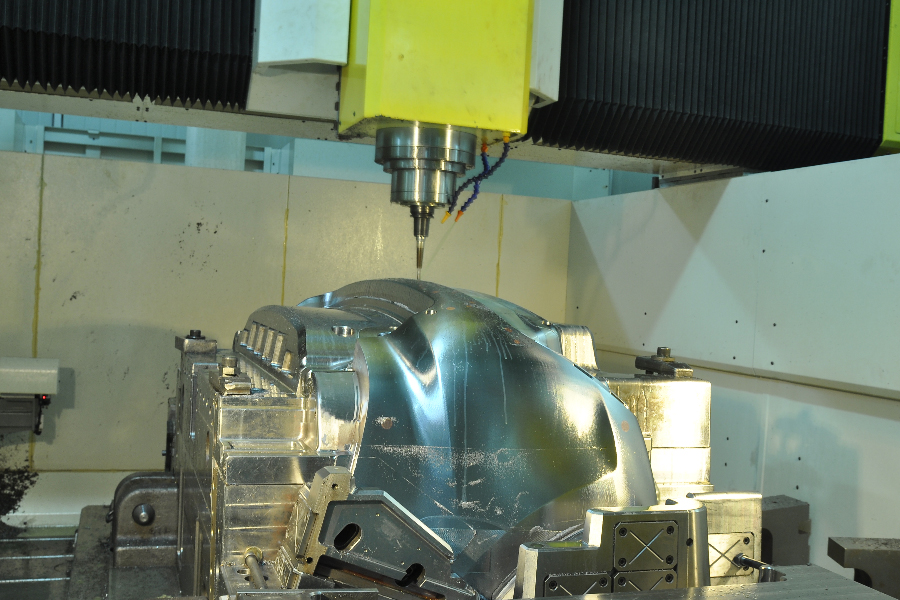
1. Identify the Type of Interior Design Change
Not every revision creates the same level of schedule risk. The impact depends on the location of the change, the current tooling stage, and whether the modification affects the mold's core functions.
Typical automotive interior design changes include:
- Dimensional adjustments: Changes to panel length, mounting holes, clips, or assembly interfaces may require updated cavity geometry.
- Appearance revisions: New grain patterns, gloss levels, decorative details, or visible surface requirements may affect polishing and texturing work.
- Structural modifications: Changes to ribs, bosses, wall thickness, or undercuts can influence filling, cooling, and ejection.
- Material changes: A revised resin grade or reinforcement level may require a new shrinkage assessment and molding validation.
At Dongke, we recommend classifying each revision according to its technical scope before estimating the schedule impact. A minor adjustment to a replaceable insert may be manageable within a limited work window, whereas changes to the parting line, major cavity surfaces, or side-action mechanisms can require broader tooling modifications.
2. Understand How the Project Stage Affects Timing
The same design change can require different amounts of work depending on whether the mold is still under review or has already entered trial production.
Before Mold Design Approval
Revisions made during the design stage generally offer greater flexibility. Our engineering team can review updated CAD files, reassess draft angles, examine gate locations, and revise the mold layout before manufacturing begins. Buyers should consolidate comments and approve a controlled drawing revision to prevent conflicting instructions.
During Mold Machining
Changes introduced after machining starts require an impact assessment. Some unfinished areas may be adjusted directly, but completed cavity surfaces, electrodes, or ordered mold components may need rework or replacement. The project team should identify which operations can continue and which must wait for approval.
After the Initial Mold Trial
Revisions made after T1 sampling may affect both tooling and validation activities. A modified mounting feature, for example, may require dimensional reinspection and another assembly check. Changes to visible surfaces may also require renewed appearance approval. The schedule should account for modification work, sample preparation, inspection, and customer review.
3. Evaluate the Technical Impact Before Approving a Revision
A clear engineering review helps prevent a seemingly simple change from creating unexpected problems later in the project. Dongke recommends examining the following areas before authorizing additional tooling work.
- CAD and drawing consistency: Confirm that the revised 3D model, 2D drawing, and product specifications describe the same approved design.
- Mold steel condition: Determine whether the affected area remains available for machining or requires welding, an insert replacement, or a new component.
- Molding behavior: Assess whether the revision could influence shrinkage, warpage, weld lines, or part release.
- Assembly compatibility: Verify that clips, fasteners, adjacent panels, and mating components remain compatible with the revised geometry.
- Inspection requirements: Identify the dimensions, appearance characteristics, and functional features that need renewed verification.
For complex geometry changes, mold-flow analysis or an updated design review may help identify potential filling and warpage concerns before further machining is authorized.
4. Build a Realistic Vehicle Launch Schedule
A reliable schedule should show the activities affected by a design change rather than adding an arbitrary number of days to the entire project. At Dongke, we recommend linking each revision to a defined set of engineering, manufacturing, and approval milestones.
| Project Activity | Required Action | Schedule Consideration |
| Revision review | Confirm the new drawing and assess technical feasibility | Engineering review and approval time |
| Tool modification | Update machining, inserts, or mold mechanisms as required | Work scope and component availability |
| Trial molding | Produce samples using the agreed material and process conditions | Machine availability and sample preparation |
| Quality verification | Inspect critical dimensions, appearance, and assembly fit | Inspection workload and customer feedback |
| Production release | Approve the revised samples and update controlled records | Sign-off responsibilities and release criteria |
These activities may overlap where technically appropriate, but dependent tasks should not be treated as complete before the necessary approvals are received. A documented change-control process gives both the customer and Dongke a shared view of outstanding decisions and schedule risks.
5. Reduce Unnecessary Delays Through Better Change Control
Customers cannot eliminate every design revision during vehicle development, but they can improve how changes are communicated and approved.
- Provide updated CAD files and drawings with clear revision identifiers.
- Explain the reason for each change and identify affected product interfaces.
- Ask for a written assessment of tooling cost, schedule, and validation implications.
- Assign authorized engineering contacts to review and approve revisions.
- Keep previous sample results and modification records for traceability.
- Agree on revised milestones before additional work begins.
These measures help distinguish supplier corrections required to meet the original specification from customer-requested changes to an already approved design. That distinction supports clearer responsibility, more accurate cost assessment, and better schedule planning.
Coordinate Design Decisions With Tooling Milestones
Interior mold design changes can affect a vehicle launch schedule, but the degree of impact depends on the revision's complexity and the stage at which it occurs. Early engineering reviews, controlled CAD updates, documented approvals, and appropriate sample validation help reduce uncertainty throughout tooling development.
At Dongke, we encourage automotive customers to discuss design changes as soon as new requirements emerge. By reviewing the affected mold features and agreeing on the necessary corrective work, inspection activities, and approval milestones, our team can help customers establish a more realistic project plan.


 +86-13736290790

 A14-1, 1st Floor, Building 1, No.118 Zhenwen Road, Xinqian Subdistrict, Huangyan District, Taizhou City, Zhejiang Province
